
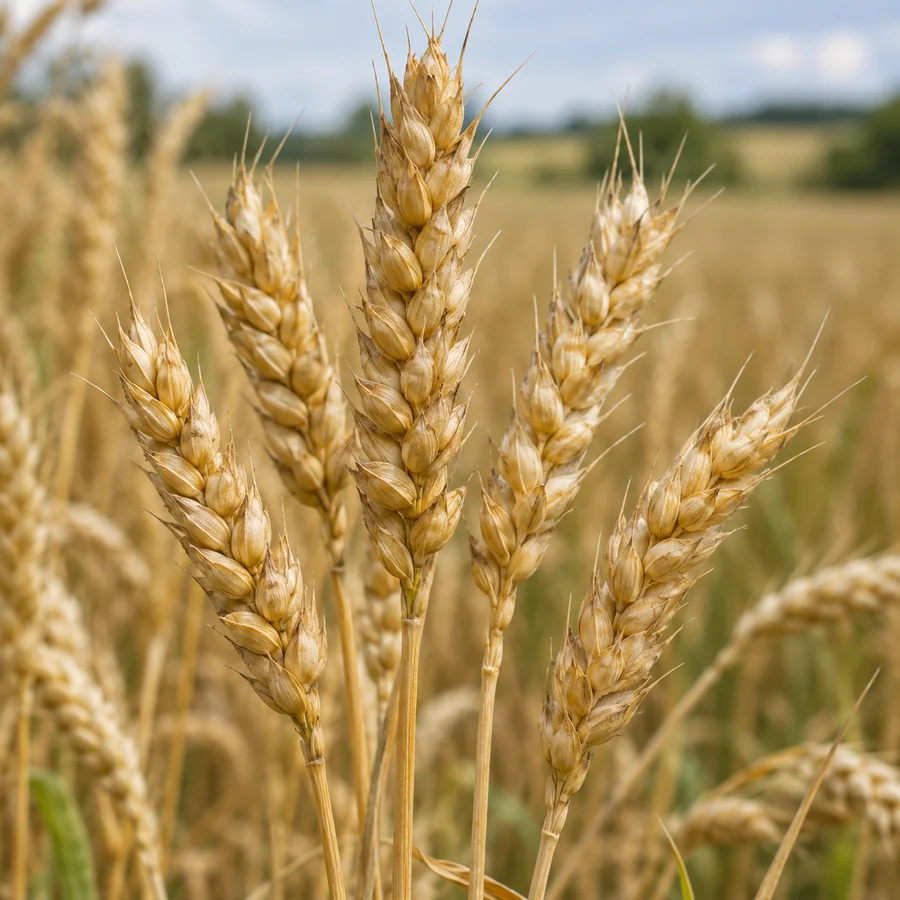
Wheat
Triticum aestivum
A high-nutrition grain crop. Grown for grain, flour, cereals and animal feed. Cold-hardy, undemanding soil conditions, produces stable yields in the CIS region.
Stages of growth
Planting calendar
How to care
Keep soil moist until germination. Watering is moderate; frequency depends on rainfall and temperature.
- •Sow in well-prepared soil
- •Pre-sowing fungicide treatment prevents fungal diseases
- •Seeding rate 200-250 kg/ha (for home growing 150-200 g per 10 m²)
Difficulty growing
Suitable for beginners. Minimal maintenance, error-resistant.
Growing conditions
Soil preparation
Planting parameters
💡Preparation Tips
- •Dig the bed to a depth of 25-30 cm
- •Add compost or humus (5-10 kg per m²)
- •If necessary, adjust pH with lime or peat
Frequently asked questions(5)
Sow spring wheat in April–May once soil warms to +10°C. Sow winter wheat in October–November for overwintering. For home gardeners, spring wheat is easier to grow in the spring-summer season.
Apply organic matter in fall or before sowing (compost 3-4 kg/m²) and mineral fertilizers: superphosphate (15-20 g/m²) and potassium (10-15 g/m²). Apply nitrogen in spring and during tillering stage (15-20 g urea per 10 m²).
In dry conditions, water when rainfall is insufficient. Critical periods: tillering and heading. Optimal 400-500 mm per season (rainfall and irrigation combined). In temperate regions, natural rainfall is often sufficient.
Under good conditions, a home garden yield is 3-5 kg per 10 m² (300-500 g/m²). Yield depends on variety, soil, moisture, and care.
Harvest at dough stage when grain is hard, cannot be dented with a fingernail, and contains 13-15% moisture. For spring varieties in temperate regions, this is usually late July to early August.
Benefits and nutrition
Benefit information coming soon
Do you like the plant card?
In the application you will receive personal tasks and a plan for the season specifically for your garden.


