
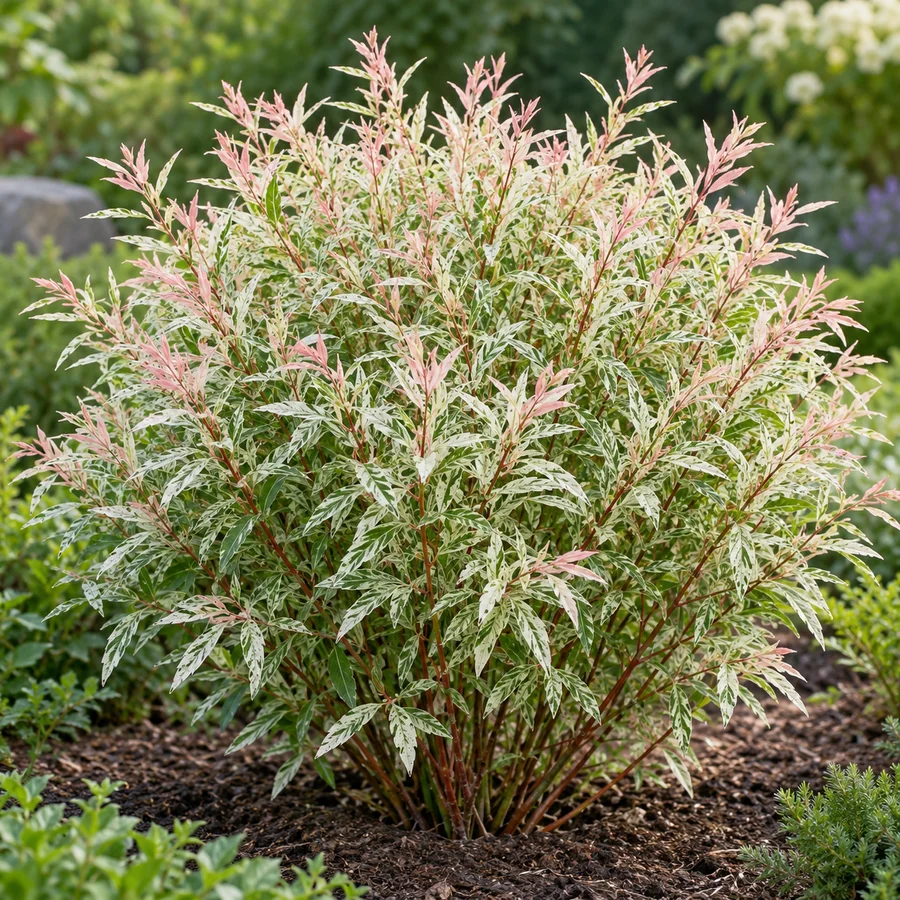
Hakuro-nishiki Willow
Salix integra 'Hakuro-nishiki'
Ornamental deciduous willow with narrow leaves variegated white and pink. A highly decorative shrub 2–3 m tall with graceful weeping branches. Requires regular pruning to maintain compact shape and vibrant leaf coloration.
Stages of growth
Calendar in the garden
How to care
Transplant rooted cuttings into open ground after 2–3 weeks. Planting depth: root collar at soil level.
Keep soil evenly moist but not waterlogged. Water young plants frequently—every 3–4 days during hot weather.
- •Protect young seedlings from direct sun for the first 1–2 weeks
- •Use light, loose substrate for rooting cuttings
- •Spray foliage to increase humidity around cuttings
Difficulty growing
Suitable for beginners. Minimal maintenance, error-resistant.
Growing conditions
Soil preparation
Planting parameters
💡Preparation Tips
- •Dig the bed to a depth of 25-30 cm
- •Add compost or humus (5-10 kg per m²)
- •If necessary, adjust pH with lime or peat
Frequently asked questions(5)
The optimal planting time is early spring (March–May) or autumn (September–November). Spring planting is preferable in regions with harsh winters, allowing the bush to establish roots before cold weather arrives.
This is a natural process in Hakuro-nishiki: young shoots emerge with bright variegated coloring but may later turn green. Intensive spring pruning stimulates the appearance of new light-colored shoots. Insufficient sunlight also contributes to loss of variegation.
Hakuro-nishiki requires regular formative pruning. The main pruning occurs in early spring (March) to remove winter damage and stimulate new variegated shoots. In summer, pinch the tips of young shoots to encourage branching and compactness.
Yes, willow tolerates wet, even swampy places well. However, stagnant water and full shade can weaken the plant. Ideally, choose a site with good drainage and partial shade in hot regions.
Use balanced fertilizers (NPK 10-10-10) in spring and summer every 2–3 weeks. Reduce feeding from late August. Regular pruning of young shoots also stimulates brightly colored foliage growth.
Role in the garden
Benefit information coming soon
Do you like the plant card?
In the application you will receive personal tasks and a plan for the season specifically for your garden.


