
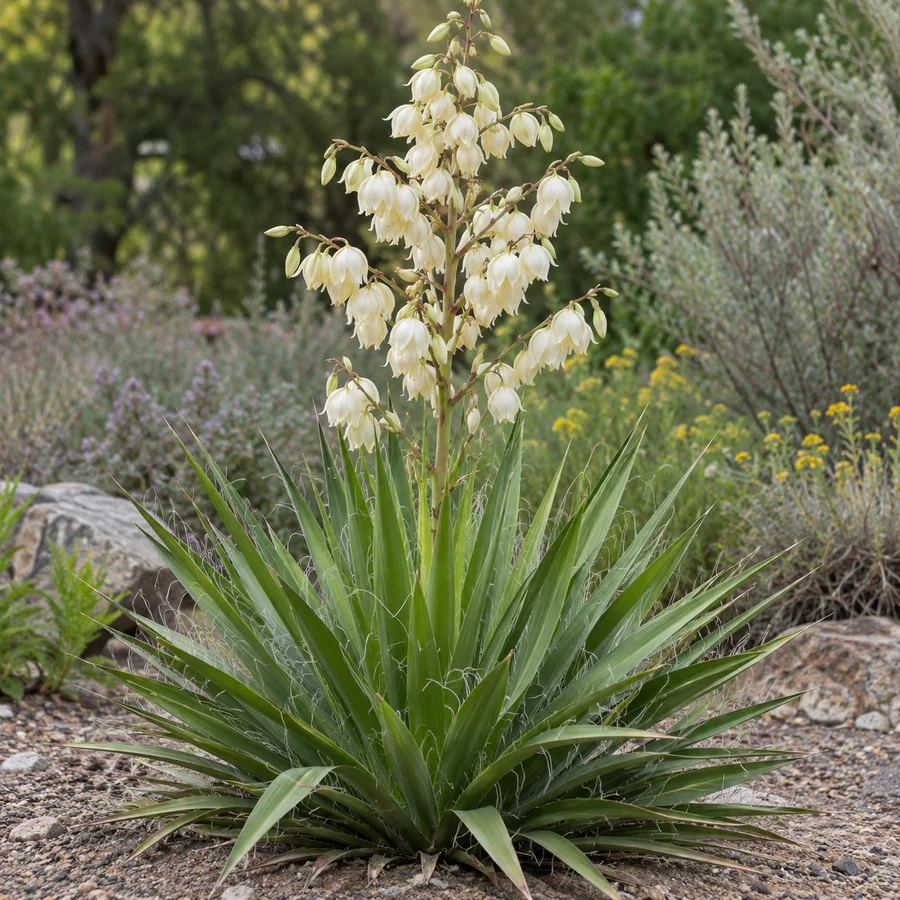
Filamentous yucca
Yucca filamentosa
Ornamental perennial shrub with stiff, sword-shaped leaves arranged in a rosette. In July–August, it produces tall (up to 2 m) spike-like inflorescences with cream-white bell-shaped flowers. Undemanding for soil, drought-tolerant, frost-hardy to −20°C. Ideal for rock gardens, alpine gardens and xerophytic landscapes. Caution: all parts of the plant (leaves, roots, seeds) contain saponins and are toxic if eaten by people, cats, dogs and horses — not for food; keep away from children and pets, and note that the sharp leaf tips can injure skin and eyes.
Stages of growth
Calendar in the garden
How to care
Water thoroughly at planting time. During the first month, keep the soil moderately moist, then transition to dry conditions.
- •Prepare a well-draining location with sand and gravel
- •Do not bury the leaf rosette — keep the crown level with the soil
- •Protect young plants from excess moisture in spring
Difficulty growing
Suitable for beginners. Minimal maintenance, error-resistant.
Growing conditions
Soil preparation
Planting parameters
💡Preparation Tips
- •Dig the bed to a depth of 25-30 cm
- •Add compost or humus (5-10 kg per m²)
- •If necessary, adjust pH with lime or peat
Frequently asked questions(5)
Usually in July–August, after 3–4 years of growth. Blooming lasts 2–3 weeks. Flower production depends directly on sunlight and dry conditions — the hotter and drier the summer, the more abundant the bloom.
Filamentous yucca is drought-tolerant. After establishment, water rarely, only during prolonged drought (more than 3 weeks without rain). Excess moisture causes root rot. Young seedlings in their first season require slightly more frequent watering.
Yes, yucca is frost-hardy to −20°C and overwinters well in open ground in temperate zones of the CIS. In autumn, mulch the base of the plant with peat or leaf litter (10–15 cm). In spring, remove the mulch to prevent rotting of the rosette during warm spells.
Yucca does not require drastic pruning. Remove frost-damaged, yellow, and dry leaves as they appear. After blooming, you can cut the flower spike at the base. Do not touch the central rosette — new leaves will grow from it.
Possible causes: insufficient sunlight (needs at least 6–8 hours of direct sun), young plant age (blooming usually starts after 3–4 years), excess soil moisture, or too much nitrogen fertilizer. Create dry and sunny conditions, and blooming will soon appear.
Role in the garden
Benefit information coming soon
Do you like the plant card?
In the application you will receive personal tasks and a plan for the season specifically for your garden.


