
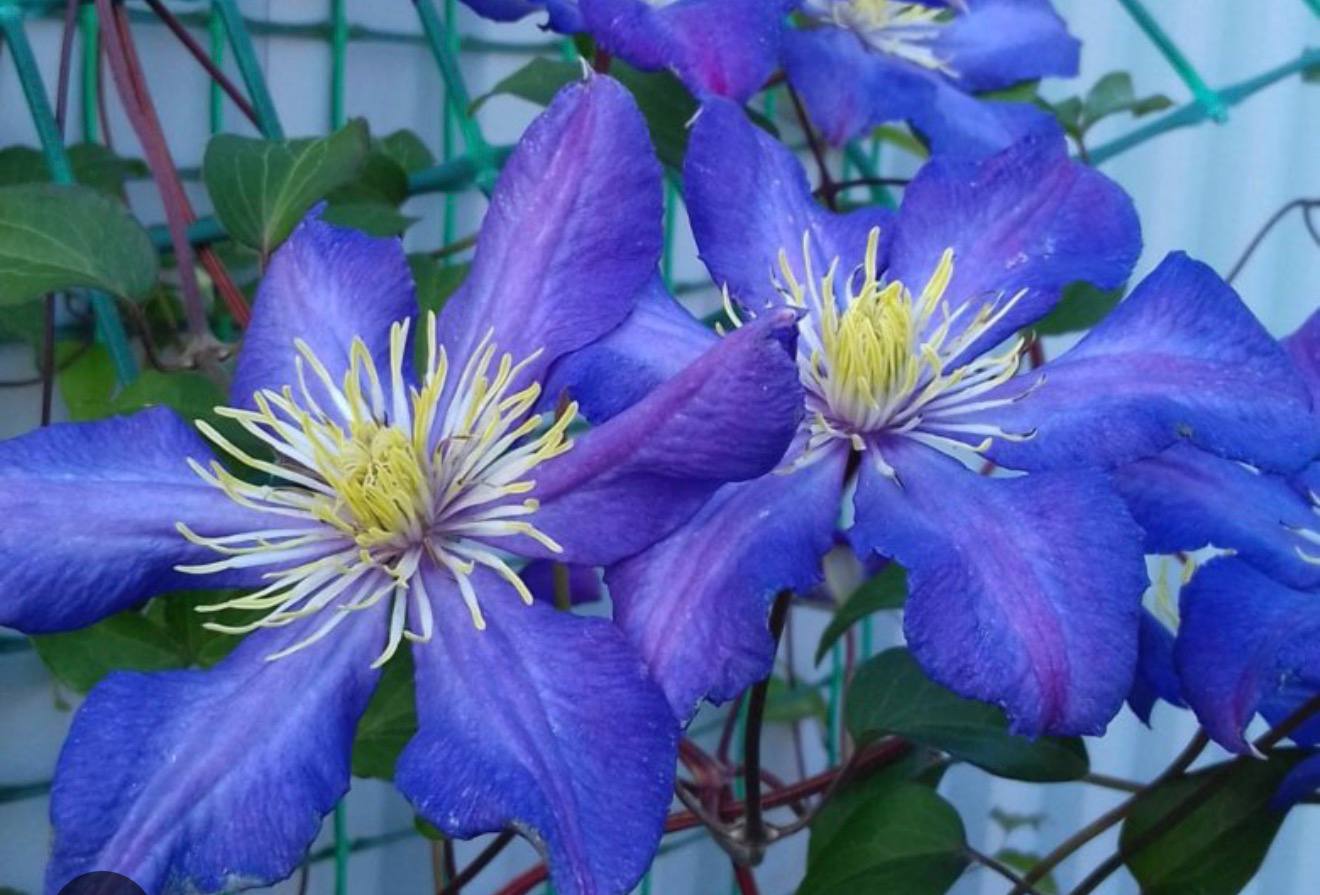
Clematis 'Biryuzinka'
Clematis 'Biryuzinka'
Decorative climbing plant with large blue flowers and violet centre. The 'Biryuzinka' variety belongs to the large-flowered clematis group, blooming abundantly from June to August. Perfect for vertical greening of pergolas, arches and fences.
Stages of growth
Calendar in the garden
How to care
Plant container-grown seedlings with the root ball intact; transplant a mature vine only in early spring or September.
Constant moisture at 10-15 cm depth: 1 bucket (10 l) per plant every 3-4 days.
- •Gently spread the roots in the planting hole
- •Bury the root collar 5-10 cm below soil level for frost protection
- •Install a support at least 2 m tall right away
- •Mulch with a 5 cm layer of organic matter
Difficulty growing
Requires basic knowledge and regular care.
Growing conditions
Nice neighbors.
Soil preparation
Planting parameters
💡Preparation Tips
- •Dig the bed to a depth of 25-30 cm
- •Add compost or humus (5-10 kg per m²)
- •If necessary, adjust pH with lime or peat
Frequently asked questions(5)
The best planting time is autumn (September-October) or early spring (March-April) in temperate zones. Fall planting is preferable: the plant establishes good roots before winter. Container-grown seedlings can be planted throughout the growing season.
Choose a sunny or partly shaded location (minimum 4-5 hours of sun daily). It is important that the root zone stays shaded: cover the soil with mulch or plant a low shrub nearby. Clematis needs good air circulation to prevent fungal diseases.
Clematis prefers moist but not waterlogged soil. Water 1-2 times per week depending on the weather (more often in heat), 1 bucket of water per plant. The soil at 10 cm depth should be moist but not soggy. Mulch with a 5-7 cm layer.
The main problem is the fungal disease clematis wilt. Prevention: good air circulation, avoiding excessive leaf wetness, prompt removal of affected shoots. At the first signs spray with copper-based products or fungicides. Do not plant clematis where another clematis previously grew.
Yes, feeding is critical for abundant flowering. In April apply a complex fertilizer (NPK 10:10:10). From May through July feed every 2 weeks with potassium and phosphorus fertilizers. From August stop nitrogen — only potassium and phosphorus to ripen the shoots and prepare for winter.
Role in the garden
Benefit information coming soon
Do you like the plant card?
In the application you will receive personal tasks and a plan for the season specifically for your garden.