
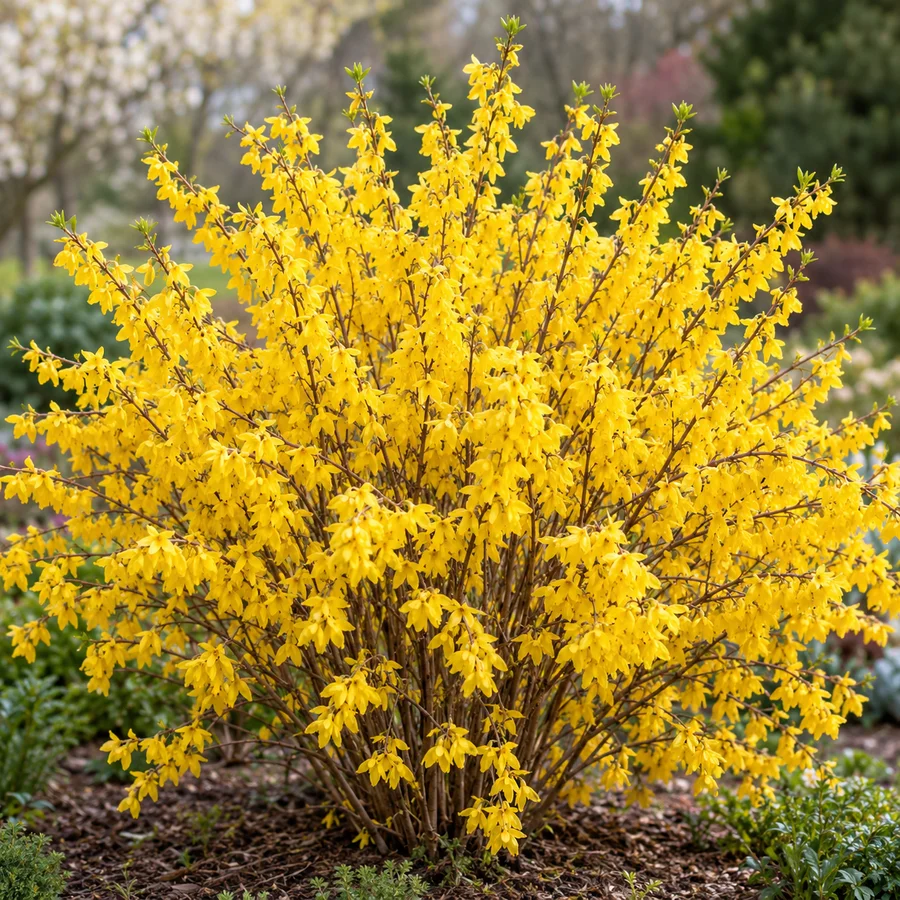
Forsythia
Forsythia
Deciduous ornamental shrub 2–3 m tall with robust branches. Blooms in early spring (March–April) with bright yellow flowers covering the branches before leaves emerge. Hardy and undemanding for soil, thrives in full sun and partial shade. Used as a hedge and in group plantings.
Stages of growth
Calendar in the garden
How to care
Abundant watering immediately after planting, then maintain soil moisture until establishment (2–3 weeks)
- •Plant in autumn or early spring in a prepared pit 50×50 cm in size
- •Drain the bottom of the pit with gravel and add humus
- •After planting, mulch with peat or bark (5–7 cm)
Difficulty growing
Suitable for beginners. Minimal maintenance, error-resistant.
Growing conditions
Nice neighbors.
Soil preparation
Planting parameters
💡Preparation Tips
- •Dig the bed to a depth of 25-30 cm
- •Add compost or humus (5-10 kg per m²)
- •If necessary, adjust pH with lime or peat
Frequently asked questions(5)
Forsythia is one of the earliest blooming shrubs. Flowering begins in late March to early April, before the leaves emerge. The blooming period lasts 2–3 weeks. In warmer regions, flowering is possible as early as late February.
Yes, pruning is beneficial for shaping the shrub and stimulating flowering. Major pruning is done immediately after flowering (May), removing up to one-third of the shoot length. Sanitary pruning is done in autumn (removing damaged branches). Without pruning, the shrub becomes sprawling and thins in the center.
Most forsythia species reach 2–3 m in height and 2–2.5 m in width. More compact cultivars reach 1–1.5 m in height (Forsythia 'Nana', 'Lynwood'). With regular pruning, you can control the shrub's size.
Forsythia is very hardy (zones 4–9, withstanding down to –35°C). Mature shrubs winter without protection. Young plants in the first year after planting in very severe regions benefit from mulching. Flower buds form in summer and may suffer frost damage during early autumn freezes, but the shrub recovers quickly.
Forsythia is undemanding and grows in most garden soils. It prefers well-draining loam with pH 6.0–7.5. It cannot tolerate heavy clay soils without drainage and waterlogged conditions. On poor soils, spring feeding with compound fertilizer is recommended.
Role in the garden
Benefit information coming soon
Do you like the plant card?
In the application you will receive personal tasks and a plan for the season specifically for your garden.


