
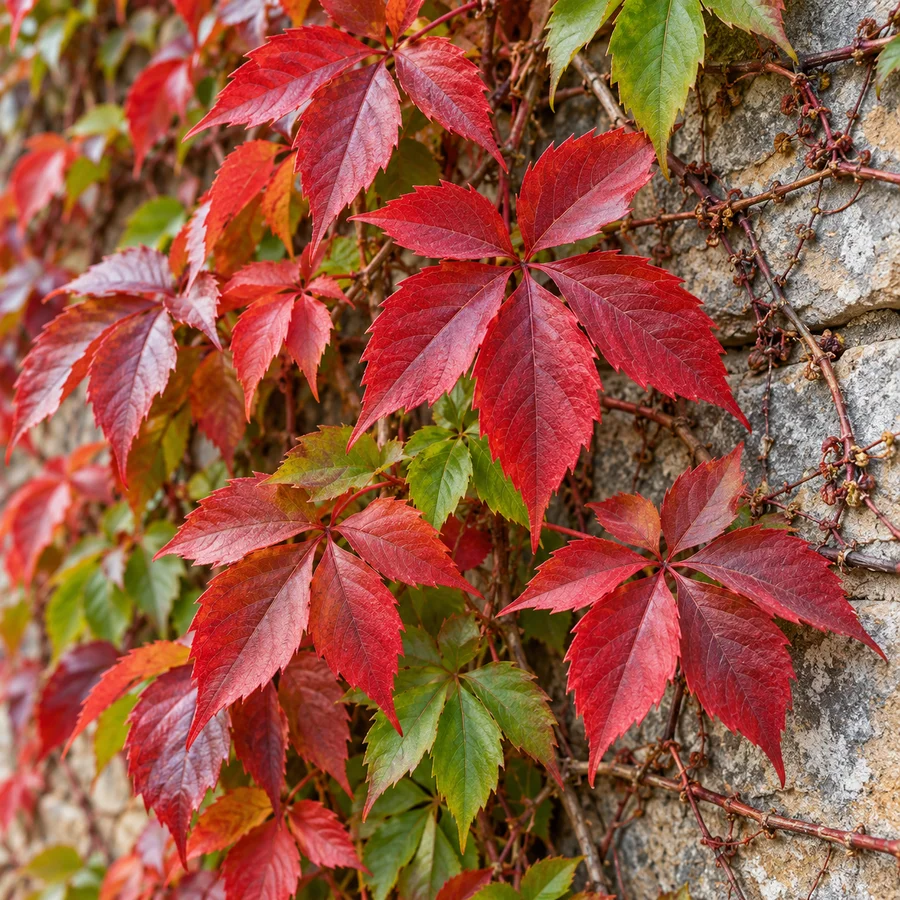
Virginia creeper, Five-leaved ivy
Parthenocissus quinquefolia
A vigorous climbing vine with five-lobed leaves that are dark green in summer and turn bright red-purple in autumn. Clings to supports with adhesive discs. Quickly covers large areas: walls, fences, pergolas. Undemanding, cold-hardy, grows in partial shade. Blue berries attract birds. Warning: the berries are toxic to people and pets (calcium oxalate crystals) — never eat them, keep the plant away from children, cats and dogs; the sap may irritate skin.
Stages of growth
Calendar in the garden
How to care
Twice per month
Universal grape fertilizer, Humic acids (for rooting)
Water regularly for the first 2–3 weeks, keeping soil moist but not waterlogged. After roots establish, reduce watering.
- •Install a sturdy support (mesh, trellis, wire) next to the plant immediately at planting.
- •Mulch the root zone with a 5 cm layer to retain moisture and regulate soil temperature.
- •Remove the weakest shoots, keeping 2–3 strong directions of growth.
- •Protect young leaves from sun with cloth in the first two weeks if weather is hot.
Difficulty growing
Suitable for beginners. Minimal maintenance, error-resistant.
Growing conditions
Nice neighbors.
Unwanted Neighbors
Soil preparation
Planting parameters
💡Preparation Tips
- •Dig the bed to a depth of 25-30 cm
- •Add compost or humus (5-10 kg per m²)
- •If necessary, adjust pH with lime or peat
Frequently asked questions(5)
Plant in early spring (April–May) or autumn (September–October) in open ground. For cuttings, spring is preferable. The key is for roots to establish before frost. In a temperate climate, spring planting is safer.
Yes, absolutely. Although the plant clings with suction disc tendrils, it needs clear direction of growth. Suitable supports include stretched cables, mesh, wooden trellis or metal structures. Without support, the vine will sprawl on the ground and tangle.
Very fast: under favourable conditions, growth is 2–3 metres per year. In 2–3 years it will completely cover a wall 3–4 metres high. After rooting, the pace is even faster. Ideal for greening new buildings and pergolas.
Suction discs hold the vine in place but do not puncture materials. However, dense cover can trap moisture and promote moss growth on the north side. On wooden and rendered walls, finish coating may peel over time. Tying up and controlling spread is recommended.
Yes, absolutely frost hardy (zone 3–9). Withstands frosts down to -40°. Leaves drop, but shoots and roots do not freeze. Young seedlings in the first year should be mulched. Winter protection is not required, except during exceptionally severe winters in northern regions.
Role in the garden
Vigorous climbing vine with five-lobed leaves that are dark green in summer and turn bright red and purple in autumn. Clings to supports with suction discs. Quickly covers large areas: walls, fences, pergolas. Undemanding, cold-hardy, grows in partial shade. Blue berries attract birds. Note: berries are toxic to people and pets (calcium oxalate crystals) — do not eat, keep plant away from children, cats and dogs; vine sap may irritate skin.
*For reference: the plant is grown primarily as an ornamental.
Do you like the plant card?
In the application you will receive personal tasks and a plan for the season specifically for your garden.


